Introduction
The amalgamation operation usually does not exist as a separate gold selection process, but an auxiliary recovery process and other selection methods to form a combined process. The process or method of using mercury to spread quickly on the surface of gold particles and capture the characteristics of gold particles to separate free gold from gold ore is called amalgamation.
In addition to the natural properties of the gold mine (particle size, shape, color), a series of parameters of the amalgamation method also directly affect the recovery rate of the final gold concentrate, such as: the quality of mercury, the method of amalgamation, the temperature of amalgamation, The slurry concentration, the slope of the mercury plate and some other equipment factors.
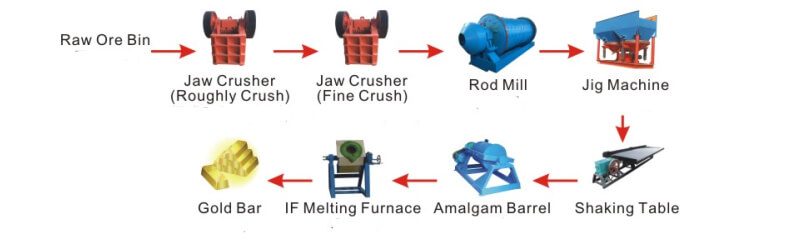
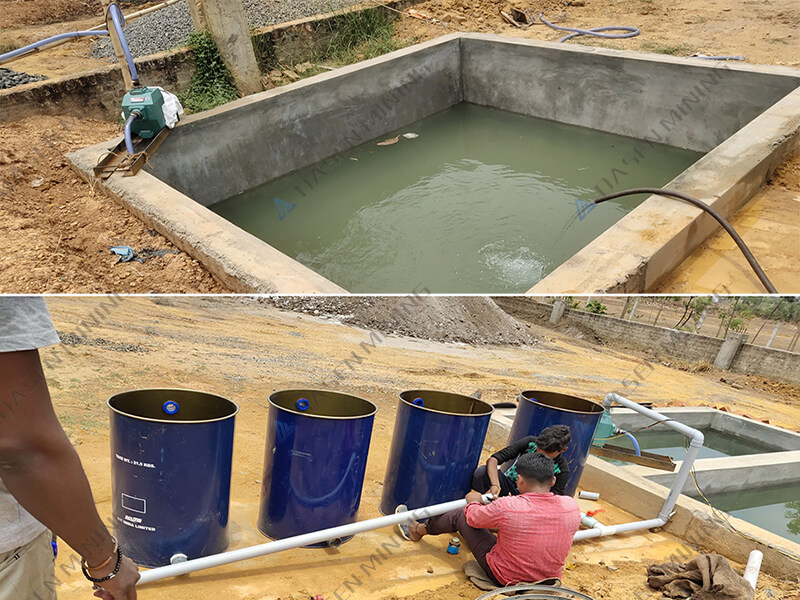
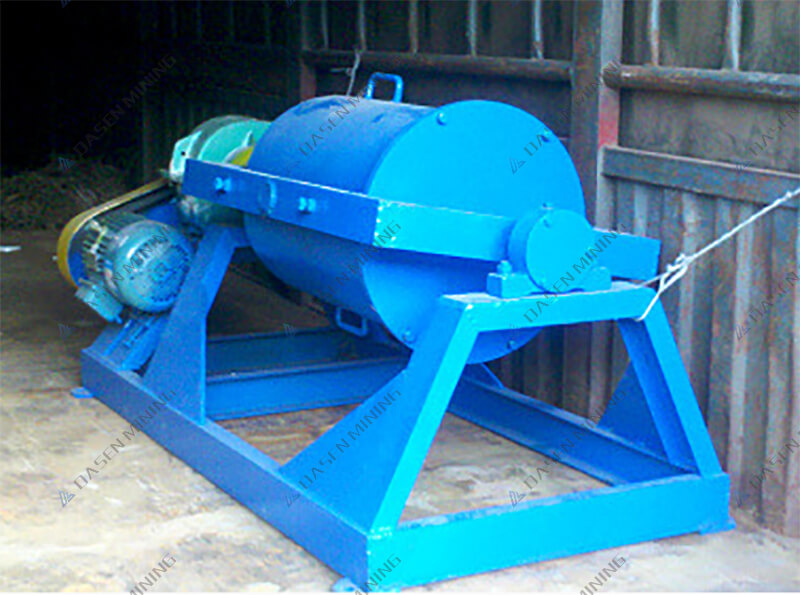
Main Machine :Jaw crusher, Rod mill,Jig machine, Shaking table,Amalgam barrel, Melting furnace
Mercury mixing usually does not exist as a separate gold separation process, but a combined process composed of auxiliary recovery process and other separation methods. Due to the toxicity of mercury vapor in mercury mixing operation and the need to purify mercury containing waste gas and wastewater, more and more are replaced by flotation and gravity separation. However, because the mercury mixing method can recover monomer natural gold and produce gold directly in situ, the simple, effective and convenient gold separation process still occupies a certain position in beneficiation.